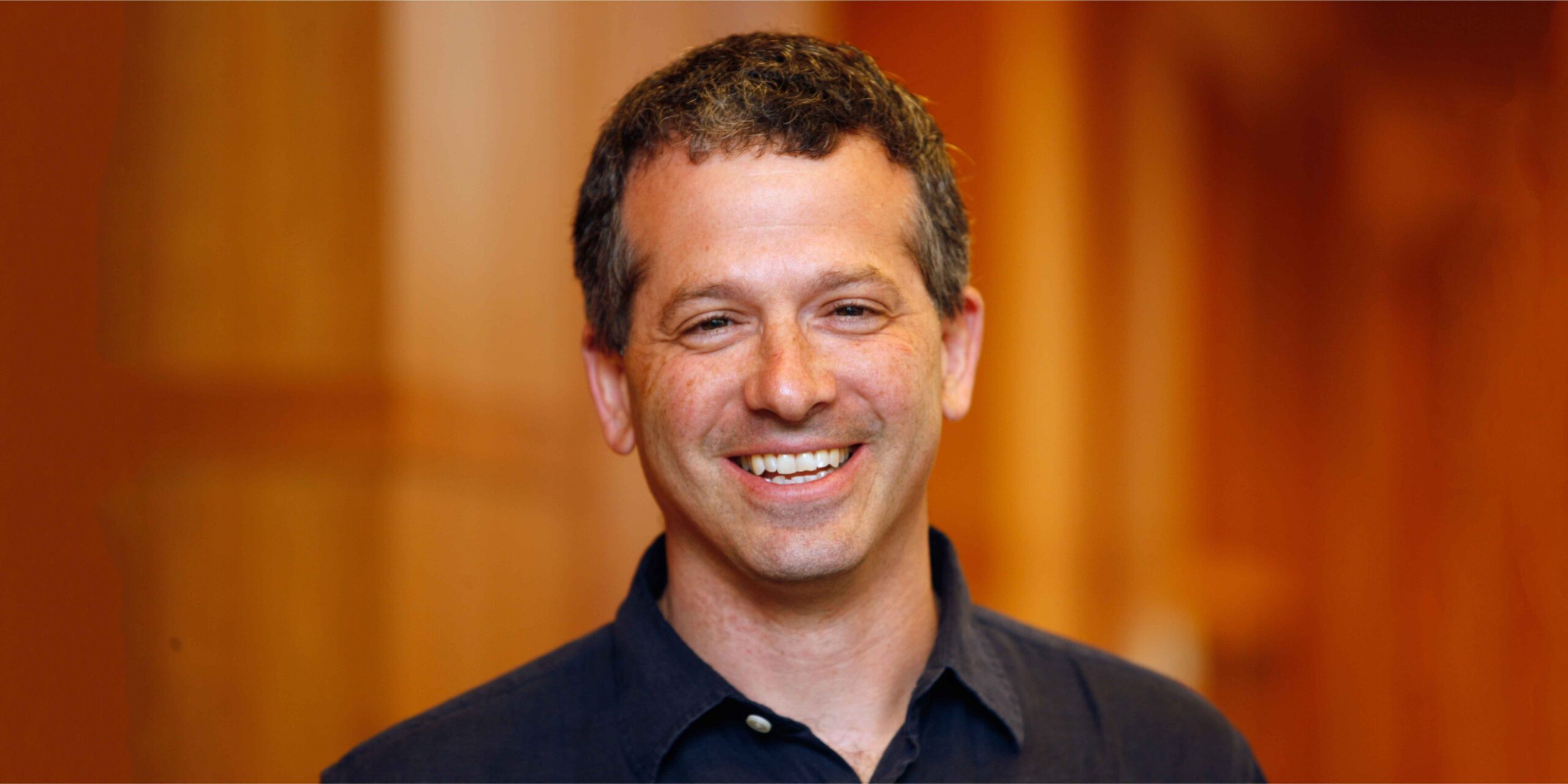
In 2026, Thouron Alum Richard Schragger (Am’93) became the William L. Matheson and Robert M. Morgenthau Distinguished Professor of Law at the University of Virginia School of Law. But before this honourable title, Richard was a young man from Trenton, N.J. searching for a purpose.
Richard received his B.A. from the University of Pennsylvania in 1992, before heading to the University College London as a Thouron Scholar. It was there that he studied Legal and Political Theory, a subject matter he now teaches and writes about in various publications. “[The Thouron Award] enabled me to study legal theory, which became the basis for my entry into law teaching and subsequent academic career,” he shares.
When he decided to apply for the Award, Richard merely hoped to find out if he truly wanted to pursue an academic career and have the opportunity to travel to London where he had relatives. Following his studies at University College London in 1993, Richard went on to study at Harvard Law School.
The Legal Journey Begins
“After graduating from Harvard Law School in 1996, I clerked for Judge Dolores Sloviter on the Third Circuit Court of Appeals in Philadelphia. I then became an associate in a law firm called Miller, Cassidy, Larroca & Lewin,” Richard states. While he would go on to practise there for two years, it was his teaching career at Quinnipiac University School of Law that ignited his passion for teaching law. It wasn’t long before Richard decided to move to the University of Virginia as a professor in 2002.
After 25 years, he remains in Virginia teaching property, land use, local government, and church and state. When he isn’t teaching, Richard works on his books, writing about the U.S. First Amendment as well as cities and local governments. “And I work with groups that advocate for more city power and municipal legal autonomy,” he explains.
As a member of The American Law Institute and an advisor for the Local Solutions Support Center, he has assisted in drafting the National League of Cities’ Principles of Home Rule for the 21st Century.
“Professionally, I have had some success as an academic. I am proud of my book, City Power: Urban Governance in a Global Age (Oxford University Press 2016), and a forthcoming book, The Attack on America’s Cities (forthcoming Princeton University Press 2027),” Richard details. His recent honour, being named William L. Matheson and Robert M. Morgenthau Distinguished Professor of Law, makes Richard believe he is either old or wise. “I’ve taught thousands of students over the past two decades, and some have come back and told me that I made a difference in their legal education and their careers,” he shares.
The Reach of a Distinguished Scholar
His impact reaches beyond his students at the University of Virginia as well, having been invited to be a visiting professor at several institutions and having published over 50 law review articles. “I have [also] filed briefs in the U.S. Supreme Court and in state and federal courts, and have sometimes had the satisfaction of judges seeming to agree with me — though not as often as I’d like, especially more recently,” Richard states.
As proud of his service to the legal profession, membership on various boards, and professional and law reform organisations as Richard is, there are two people he is most proud of. “I am proud of my two children, who are now young adults, 23 and 19; they bring me a great deal of joy,” he expresses.
His pride also extends to our Award too. When asked what ways he hoped the Thouron Award continues to grow and evolve in the years to come Richard echoed a sentiment we hold dear to our mission as a fellowship programme: “I hope it continues to provide Penn students with a great opportunity to study abroad and continue its mission to link [the] U.S. and England,” he states.
—
What Could Your Future Look Like as a Thouron Scholar?
Learn more about the Thouron Award — one of the most prestigious and generous academic scholarships in the world, offering funding and cultural exchange between the University of Pennsylvania and U.K. institutions.
Applications for the Award are open from July to October for candidates from Penn, and July to November for U.K. candidates.